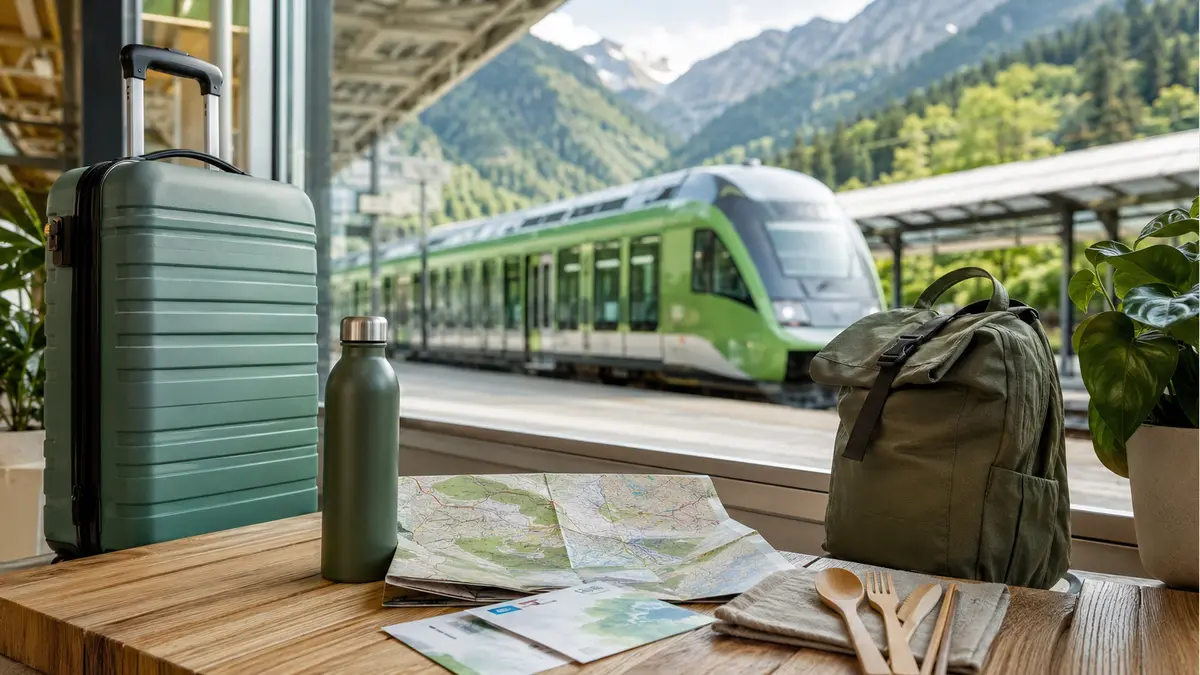
The most useful sustainable travel tips do not ask people to buy a new collection of “green” products. They help travelers make fewer, better decisions: choose lower-impact transport when practical, stay longer, pack lighter, reduce waste, respect local culture, support legitimate local businesses, and protect the places that make a trip worthwhile.
Sustainable travel includes environmental, social, cultural, and economic effects. No trip is impact-free, and individual choices do not replace responsible infrastructure or business practices. Still, a thoughtful traveler can reduce avoidable harm and direct more of the trip’s value toward local communities.
What sustainable travel really means
UN Tourism describes sustainable tourism as a continuous process that requires monitoring impacts and introducing preventive or corrective measures. It should use environmental resources responsibly, respect host communities and cultural authenticity, and support viable economic activity.
That broad definition matters. A hotel may reduce plastic but displace residents, underpay workers, waste water, or make vague environmental claims. A rural guesthouse may look simple but employ local staff, buy local food, restore a historic building, and manage resources carefully. Judge the whole operation where information is available.
The official UN Tourism responsible tourist guidance encourages travelers to honor host communities, protect the planet, support local economies, be informed, and travel respectfully. Use those principles from the planning stage through the return home.
Begin with whether, where, and how long
The largest travel decision is often not which reusable bottle to carry. It is the destination, distance, transport, frequency, and length of stay. One longer, well-planned trip may create more value and less repeated transport than several short breaks to distant places.
Choose a destination that fits the season
Research climate, water conditions, wildfire or flood risk, peak crowds, cultural events, and local capacity. Visiting in a shoulder season can distribute income and reduce crowd pressure, but only if services are open and conditions are safe. Do not travel to a place facing an emergency simply because prices fell.
Slow the itinerary
Fewer bases mean less transport, fewer check-ins, and more time to understand a place. Instead of spending one night in four cities, consider three or four nights in one area with day trips by public transport or walking. A slower plan can also reduce stress and missed connections.
Consider nearby alternatives
A regional trip by train or shared transport may offer culture, nature, food, and rest without long-distance travel. The goal is not to prove virtue by staying home. It is to notice that memorable travel does not always require crossing the greatest distance.
Compare transport realistically
Walking, cycling, and public transport
For short local trips, walking and cycling can reduce emissions while revealing neighborhoods that a car bypasses. Use safe routes, obey local rules, wear appropriate protection, and avoid cycling in unfamiliar dangerous traffic. Public transport often moves many people efficiently and reduces parking pressure.
Learn the payment system before arrival, download an offline map, and check the last service of the day. A day pass may be convenient, but calculate whether it fits the actual itinerary. Keep bags secure and follow local safety guidance.
Rail and coach
Trains and scheduled coaches are often practical alternatives for regional travel. Compare total journey time from city center to city center, luggage rules, reliability, accessibility, and overnight options. A longer rail trip can become part of the experience rather than lost time.
Flying
When a flight is necessary, choose a direct route when practical, travel less frequently, stay longer, and pack lighter. Economy seating generally carries more passengers per unit of space than premium cabins. Avoid adding a connection only to chase a very small fare difference if it greatly increases distance or risk.
Carbon calculators and offset products vary in method and quality. Reducing avoidable travel comes first. If purchasing a climate contribution, look for transparent accounting, independent standards, additional projects, realistic permanence, and safeguards for local communities. Do not treat payment as permission to ignore other effects.
Cars and taxis
Share rides, select the smallest suitable vehicle, combine errands, and drive smoothly. An electric vehicle can reduce tailpipe pollution, but the full impact depends on electricity and vehicle production. In a destination with strong transit, renting a car for only the rural portion may be better than keeping it throughout the trip.
Pack lighter and pack for reuse
Every item requires space and transport. Create a small capsule of layers that mix, dry reasonably quickly, and suit local customs. Check laundry options, weather ranges, and accommodation supplies before packing duplicates.
A practical low-waste packing list
- Durable refillable water bottle where tap-water guidance allows
- Small reusable cup or cutlery only if you will actually use it
- Lightweight shopping bag
- Refillable toiletry containers within transport rules
- Repair tape, small sewing kit, and spare fastener
- Power adapter appropriate to the destination
- Offline copies of tickets, maps, and essential documents
- Modest, climate-appropriate clothing that respects local norms
Do not buy a new “eco” version of an item that already works. The most sustainable product is often the one you own, maintain, and reuse. Avoid packing prohibited or invasive plant, food, soil, and wildlife products.
Choose accommodation with evidence
Look beyond a leaf icon or unverified claim. A responsible accommodation should explain specific actions and results: energy and water management, waste separation, local hiring, fair labor, accessibility, responsible purchasing, habitat protection, and guest education.
Questions to ask
- Is the property locally owned or does it retain local staff and suppliers?
- Does it measure energy, water, and waste rather than promise vague care?
- Are environmental certifications independent and current?
- How are workers treated and trained?
- Does the property respect land, water, and community access?
- Are food, cleaning, and amenity practices transparent?
- Can it support halal food needs without guessing or making false claims?
A small property may not have a costly certification. Clear policies, locally rooted operations, efficient equipment, fair employment, and honest answers can still show responsible management.
Use the room responsibly
Reuse towels and linen when hygienic and practical, turn off lights and climate control when leaving, report leaks, take short showers in water-stressed regions, and avoid demanding daily replacement of unopened amenities. Keep windows closed when heating or cooling systems require it.
Eat in ways that support the destination
Local food can connect travelers with agriculture, history, and family businesses. Choose restaurants and markets used by residents, order an amount you can finish, and ask how unfamiliar dishes are prepared. Seasonal food may require less storage and transport, though sustainability depends on production as well as distance.
Plan halal meals respectfully
Research halal certification and community resources before travel. “No pork” does not necessarily mean halal preparation, and a vegetarian dish may contain alcohol, non-halal stock, or cross-contact. Ask concise, respectful questions and accept when staff cannot guarantee a requirement.
Save verified restaurants and grocery options on an offline map. Accommodation with a kitchen may provide flexibility, but follow local rules and food-safety practices. Avoid wasting food by buying in realistic quantities.
Reduce single-use waste
Refill water only where the supply is considered safe. Decline straws, bags, or disposable cutlery when unnecessary. Learn the local recycling system; putting the wrong material in a bin can contaminate the stream. In places without safe refill water, health comes first—use sealed water and consolidate larger containers where appropriate.
Support local economies without exploiting culture
Spend with locally owned guides, restaurants, shops, craftspeople, and transport providers. Pay fair prices and tip according to local practice. Bargaining may be expected in some markets, but turning a small purchase into an aggressive contest can be disrespectful.
Buy authentic crafts
Ask who made the item, what materials were used, and whether export rules apply. Avoid wildlife products, coral, protected wood, antiquities, and objects that may have been removed illegally. A genuine locally made object is usually a better memory than a mass-produced souvenir labeled with the destination.
Choose tours carefully
A responsible guide explains group size, safety, wages, cultural permissions, wildlife distance, waste, and community benefit. Avoid experiences that enter private areas without consent, stage poverty, encourage giving to children for photographs, or treat sacred places as sets.
Respect culture, religion, and daily life
Learn basic greetings, dress expectations, prayer times, photography rules, and public behavior before arrival. A destination is someone’s home, not a theme park. Speak quietly in residential and sacred spaces, follow posted rules, and avoid blocking pathways for a photograph.
Photography and social media
Ask permission before photographing an identifiable person, their home, workplace, children, worship, or private ceremony. A smile is not always informed consent. Do not geotag fragile natural or cultural sites if increased traffic could cause damage.
Caption responsibly. Do not present a short visit as expertise or use people’s hardship as entertainment. Correct misinformation and identify sponsored relationships.
Places of worship
Confirm visitor hours, clothing, ablution areas, gender-specific spaces, and photography rules. Do not enter during a service or prayer unless visitors are welcomed. Turn off alerts, keep conversations quiet, and follow the instructions of the community.
Protect wildlife and natural areas
Keep distance
Wild animals change behavior when approached, fed, touched, or surrounded. Use a zoom lens, obey closures, and follow the guide or ranger’s distance. Never move an animal for a better photograph.
Stay on durable routes
Use marked trails and designated campsites. Shortcuts can erode soil, damage vegetation, and create unsafe paths. Pack out waste, including food scraps and tissues, according to local rules. Do not collect rocks, plants, shells, or archaeological material where prohibited.
Avoid harmful animal attractions
Be cautious with close-contact wildlife selfies, performances, riding, bathing, or handling. Research independent animal-welfare information, not only operator reviews. Legitimate rescue or conservation work prioritizes the animal’s needs and may limit visitor contact.
Use water carefully
Water pressure differs dramatically by destination. In dry regions, pools, lawns, frequent linen changes, and long showers can compete with community needs. Choose accommodation that explains water sources and conservation, report leaks, and avoid unnecessary laundry.
Do not assume a reusable bottle makes every refill safe. Follow official drinking-water advice. In nature, use appropriate treatment and keep soap, sunscreen, and waste away from water sources according to local guidance.
Manage digital and device impacts
Download maps and entertainment on Wi-Fi, carry one suitable charger, and use devices for their full useful life. Do not buy travel electronics that will be discarded after one trip. Return batteries and e-waste to approved collection points rather than ordinary bins.
Protect personal data on public networks. Update devices, use strong authentication, avoid unknown charging stations, and keep backups. The small business cybersecurity checklist includes account and device practices that also help business travelers.
Build a responsible itinerary
| Decision | Less thoughtful option | Better question |
|---|---|---|
| Destination | Copy the most viral place | Where can this season and my budget support a good visit? |
| Transport | Choose only the cheapest ticket | What is the total time, distance, and local impact? |
| Schedule | One night in every city | Can I stay longer and explore a smaller area? |
| Accommodation | Trust a green badge | What measurable environmental and labor practices exist? |
| Food | Use global chains only | Which verified local options meet my dietary needs? |
| Activities | Prioritize close wildlife contact | Does the experience protect animals and community consent? |
| Souvenirs | Buy mass-produced objects | Who made this and are the materials legal and responsible? |
Before-you-book checklist
- Check official entry, health, safety, and weather guidance.
- Compare direct and lower-impact transport options.
- Reduce the number of bases and extend useful stays.
- Research accommodation ownership, labor, water, energy, and waste practices.
- Save verified halal food and prayer options.
- Choose legitimate local guides and animal-responsible activities.
- Review cultural expectations and photography consent.
- Pack a small reusable kit and repairable clothing.
- Protect devices, documents, and backups.
- Buy suitable travel insurance and understand exclusions.
During-the-trip checklist
- Walk, cycle, or use public transport when safe and practical.
- Refill water only from a safe supply.
- Reduce towel, linen, energy, and climate-control waste.
- Eat at responsible local businesses and order realistic portions.
- Ask before photographing people or private places.
- Keep distance from wildlife and stay on marked routes.
- Follow waste and recycling systems correctly.
- Report leaks, damage, unsafe practice, or misleading claims respectfully.
- Leave honest, specific reviews that reward responsible behavior.
After the trip
Review what worked. Which transport was easiest? Did the accommodation support its claims? Which local businesses provided real value? Share useful details rather than vague praise. Mention public transport access, refill stations, halal verification, accessibility, and responsible guide behavior.
Unpack and maintain equipment so it can be used again. Repair clothing and luggage, store adapters together, and recycle damaged electronics through approved channels. Record the trip’s true cost and decide whether the next journey can be slower or closer.
Responsible travel with children and family groups
Family travel can create more luggage and complicated transport, but it also offers a chance to teach respect. Give children age-appropriate responsibility for a refillable bottle, litter check, public-transport map, or polite greeting. Explain before visiting a sacred place, market, home, or natural area what behavior is expected and why.
Build extra time into the itinerary. A rushed family is more likely to use expensive emergency transport, waste food, or ignore local rules. Choose fewer activities, include rest, and book accommodation near the places used most. A kitchenette or laundry access may reduce packing and food waste on a longer stay.
Do not post identifiable images of local children or vulnerable people without informed permission from an appropriate adult and the person where age permits. Protect your own family’s location and routine as well. Avoid sharing live room numbers, travel documents, school names, or an empty-home schedule.
Accessibility is part of sustainability
A destination is not socially sustainable if people with disabilities, older travelers, families, or residents cannot participate safely. Accessibility needs vary, so ask for measurements and specific features rather than a simple “accessible” label. Confirm step-free routes, lift dimensions, bathroom layout, bed height, transport boarding, seating, audio or visual information, and emergency procedures.
Contact accommodation and operators in writing, then reconfirm shortly before the trip. Build a backup for essential equipment, medicine, charging, refrigeration, mobility-device repair, and transport. A direct flight or private vehicle may be the responsible practical choice for a traveler whose health or access needs make other routes unsafe.
Leave reviews that describe access accurately without sharing another person’s private medical information. Specific details help future travelers and reward businesses that invest in inclusive design.
Think carefully about volunteering abroad
Short volunteer trips can prioritize the visitor’s experience over local needs. Avoid programs that give unqualified travelers medical, teaching, construction, or child-care roles; repeatedly expose children to temporary attachments; replace paid local work; or use poverty in marketing.
A responsible organization is led by community-defined goals, screens and trains participants, protects vulnerable people, uses appropriate professional qualifications, measures long-term outcomes, and is transparent about money. Sometimes the more useful contribution is to hire local services, support a trusted locally led organization, or share a professional skill remotely over a longer period.
Prepare for disruptions without creating waste
Sustainable travel still requires safety. Keep a modest emergency reserve, copies of essential documents, insurance contacts, basic first aid appropriate to your training, required medicine in original packaging, and a reliable way to communicate. Register with official traveler services where applicable.
Check weather, transport strikes, health notices, and local emergencies through official sources. If authorities ask visitors to conserve water, avoid an area, evacuate, or stay away after a disaster, follow the instruction. Do not travel into a recovery zone to take photographs or consume scarce accommodation unless a legitimate organization has requested your qualified help.
When a delay creates an unplanned overnight stay, use the same principles: choose safe transport, communicate with accommodation, minimize new purchases, and keep receipts for insurance. Safety comes before avoiding a single-use item or a taxi.
Common sustainable travel mistakes
Buying more products
A drawer of travel gadgets is not sustainability. Reuse what you own and add an item only when it replaces repeated waste or solves a real problem.
Believing every label
Look for evidence, measurement, independent standards, and transparent limits. Vague words such as natural, conscious, eco, or green may be marketing without substance.
Ignoring social effects
Low plastic use does not compensate for poor labor, housing displacement, cultural disrespect, or unsafe wildlife practices. Consider who benefits and who bears the cost.
Expecting perfection
A rigid plan can create shame or unsafe choices. Health, disability, family needs, route availability, and budget affect what is possible. Choose the best practical option and improve the next decision.
Frequently asked questions
What is the single best sustainable travel choice?
Reduce unnecessary long-distance trips and stay longer when you do travel. Transport usually matters more than small amenity choices, although every destination and route is different.
Is train travel always more sustainable than flying?
Rail is often lower impact, especially on well-used electrified routes, but electricity sources, distance, occupancy, and alternative routing matter. Compare credible route-specific information and the complete journey.
How can I tell whether a hotel is genuinely sustainable?
Look for specific measured actions, independent certification where available, local hiring and purchasing, transparent water and energy management, fair labor, and honest limits. Do not rely on a logo alone.
Are carbon offsets enough for a flight?
No. Reduce avoidable travel first. If contributing to a climate project, assess additionality, permanence, verification, transparent accounting, and community safeguards. It does not make the flight impact-free.
How can Muslim travelers plan halal food sustainably?
Research verified halal local restaurants, markets, and accommodation before arrival. Ask clearly about certification, ingredients, alcohol, stock, and cross-contact. Buy realistic portions and support responsible local producers where possible.
What should I avoid buying as a souvenir?
Avoid protected wildlife products, coral, antiquities, endangered wood, illegally removed natural material, and items of uncertain origin. Choose legal, locally made crafts with clear materials and maker information.
Final takeaway
Sustainable travel is a sequence of informed choices. Travel less often and stay longer, choose efficient transport, pack lighter, ask for evidence from accommodation, spend locally, plan halal needs respectfully, protect nature, and honor community consent. Perfection is not the target. The goal is a trip that creates meaningful experience while reducing avoidable cost to the destination.