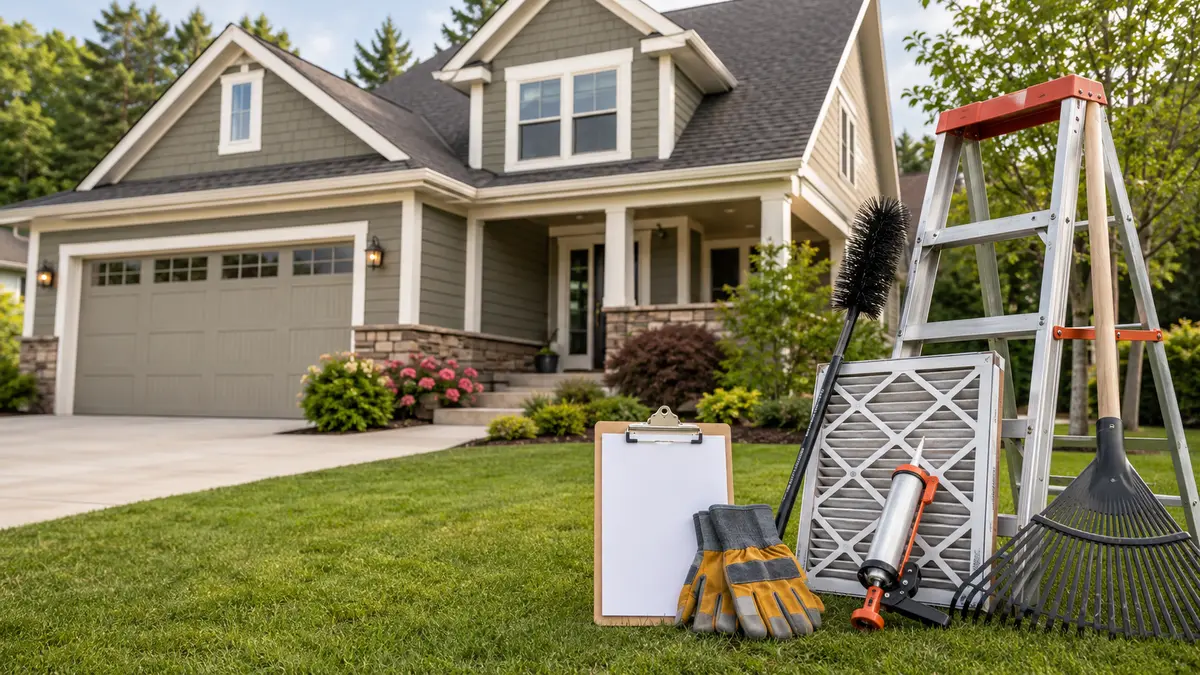
A seasonal home maintenance checklist helps prevent small defects from becoming expensive emergencies. The purpose is not to inspect every component like a licensed specialist. It is to notice change, perform safe routine care, keep records, and call the right professional before water, heat, weather, pests, or wear causes greater damage.
This guide organizes practical tasks by spring, summer, autumn, and winter, with monthly and annual checks. Climate, construction, equipment, local codes, warranties, and occupant needs vary. Follow manufacturer instructions and use qualified professionals for roofing, electrical, fuel, structural, pest, hazardous-material, and other specialized work.
Create a maintenance record before starting
A house has hundreds of components with different service lives. Good records make the schedule manageable. Create a folder for the property with purchase documents, warranties, manuals, model and serial numbers, contractor details, paint colors, filter sizes, permits, service reports, photographs, and utility shutoff information.
Build a simple calendar with monthly, seasonal, and annual tasks. Assign an owner and add reminders several weeks before weather changes. Record the date, observation, action, cost, and next due date. Photographs from the same viewpoint help reveal slow changes in cracks, staining, grading, sealant, roof surfaces, and equipment condition.
Know the emergency controls
Every responsible adult in the home should know how to locate the main water shutoff, electrical service panel, gas or fuel shutoff where appropriate, fire extinguishers, smoke and carbon-monoxide alarms, and emergency exits. Do not operate a control you do not understand. Label clearly and keep access unobstructed.
Monthly home maintenance tasks
Check for water
Look under sinks, around toilets, beside the water heater, near laundry connections, under the dishwasher, around showers, and at ceilings below plumbing. Feel for dampness only when electrically safe. Investigate staining, swelling, soft materials, peeling paint, musty odors, or an unexplained increase in water use.
Test safety devices
Test smoke and carbon-monoxide alarms according to their manufacturer and local fire-safety guidance. Replace batteries and units on schedule. Check that fire extinguishers are accessible, undamaged, and within their stated service period. Teach the household that evacuation comes before trying to fight a fire.
Inspect HVAC filters
Check heating and cooling filters during active seasons and replace or clean them as required. The ENERGY STAR maintenance checklist recommends regular filter inspection because dirty filters can increase energy costs and damage equipment. Use only a filter type compatible with the system.
Walk the exterior
From the ground, look for loose materials, damaged screens, blocked drainage, leaning fences, pest activity, vegetation touching the building, and new cracks. Do not climb a roof. Binoculars or a camera with zoom can support a safe ground-level review.
Spring maintenance checklist
Spring is the time to identify winter damage, restore drainage, prepare cooling equipment, and address moisture before warm weather encourages growth.
Roof, gutters, and drainage
- Inspect roof surfaces from the ground for missing, lifted, cracked, or displaced materials.
- Look for damaged flashing around chimneys, vents, valleys, and roof edges.
- Clean gutters and downspouts safely or hire a qualified service.
- Confirm downspouts discharge to an appropriate location away from the foundation.
- Check for soil erosion, standing water, and settlement near the house.
- Inspect interior ceilings and attic areas for staining after heavy rain, when safe.
Gutters filled with leaves cannot direct water effectively. However, ladder and roof work carry serious fall risk. Use ground-based tools where suitable and hire a professional when height, slope, power lines, weather, or physical ability make the task unsafe.
Foundation and exterior walls
Look for new or changing cracks, spalling, loose cladding, failed sealant, rot, and gaps where pipes or cables enter. A thin stable surface crack may differ from a widening, displaced, horizontal, or water-leaking crack. Mark and photograph changes, and seek structural or waterproofing advice when movement or water entry is concerning.
Windows and doors
Clean tracks and weep openings without damaging seals. Check screens, weather stripping, locks, and operation. Repair peeling exterior finish and failed sealant using a product compatible with the materials. Do not seal designed drainage or ventilation openings.
Cooling system
Schedule professional service before the first extreme heat if the system requires it. Clear leaves and vegetation from the outdoor unit while maintaining the manufacturer’s specified clearance. Do not bend fins, open electrical panels, or handle refrigerant.
Outdoor water systems
Turn on exterior taps and irrigation gradually after freezing weather has passed. Watch indoor connections while testing for hidden splits. Check hose washers, sprinkler heads, backflow devices, and visible pipework. Irrigation should water plants, not the foundation or siding.
Summer maintenance checklist
Summer maintenance focuses on cooling efficiency, storm readiness, exterior finishes, pests, and managing water during heavy use.
Manage heat and cooling
- Keep supply and return vents clear.
- Check filters monthly during heavy use.
- Use blinds or shading to reduce unwanted solar heat.
- Run ceiling fans in the appropriate direction and turn them off in empty rooms.
- Investigate short cycling, unusual sound, ice, leaking, odor, or poor cooling.
Do not compensate for a failing system by setting the thermostat extremely low. Call a qualified technician if cooling performance changes significantly.
Inspect decks, steps, and railings
Check boards, fasteners, posts, stairs, guards, and handrails for movement, decay, corrosion, splinters, and trip hazards. Pay attention where structures attach to the house. A surface coating cannot repair structural rot or an unsafe connection.
Control vegetation and pests
Trim plants to maintain airflow and access without damaging the building or violating local habitat rules. Keep firewood and dense storage away from exterior walls where appropriate. Seal small pest entry points only after confirming nothing will be trapped inside and the opening is not required for ventilation.
Termites, structural wood damage, rodents, stinging insects, and persistent infestations may require a licensed pest professional. Use the least hazardous effective method and follow label directions.
Prepare for storms
Secure outdoor furniture and loose objects, clear drains, inspect trees for obvious hazards, and know where to shelter. Maintain an emergency kit, backup lighting, communication plan, and copies of insurance information. A generator must always be operated outdoors, far from doors, windows, and vents, according to official safety guidance.
Autumn maintenance checklist
Autumn is the major preparation season for heating, freezing temperatures, rain, wind, and shorter days.
Roof and drainage before winter
Repeat the ground-level roof inspection, clean gutters after leaves fall, and confirm downspouts are connected and stable. Check attic ventilation openings for blockage without disturbing insulation. Investigate roof leaks before snow or prolonged rain makes access more difficult.
Heating system and combustion safety
Have fuel-burning equipment, chimneys, and vents inspected and serviced by qualified professionals at the appropriate interval. Replace compatible filters, clear vents, and test the system before the first cold emergency. Never use an oven, grill, outdoor heater, or generator to warm the home.
Confirm carbon-monoxide alarms are installed and working according to local rules and manufacturer instructions. Watch for soot, unusual odor, yellow or unstable flames where a blue flame is expected, frequent pilot failure, or occupants feeling ill. Leave and seek emergency help for suspected carbon monoxide or fuel leakage.
Seal appropriate air leaks
Inspect weather stripping and door sweeps. Use compatible sealant around appropriate penetrations. Do not block combustion air, drainage, or designed ventilation. For major energy improvements, a professional assessment can identify air leaks and insulation gaps without creating moisture or combustion problems.
Protect plumbing and outdoor equipment
- Disconnect and drain hoses.
- Shut down irrigation using the system’s correct winterization method.
- Protect vulnerable outdoor taps and pipes according to climate and construction.
- Service snow equipment and store fuel safely.
- Move temperature-sensitive products to appropriate storage.
- Clean and cover outdoor furniture only when dry.
Winter maintenance checklist
Winter checks focus on heating, frozen water, ice, storm damage, and early detection of roof or moisture problems.
Monitor pipes and indoor temperature
Keep the building at a safe temperature and protect vulnerable pipes. Know the water shutoff. During severe cold, follow local utility and emergency-management advice. If a pipe freezes, do not use an open flame to thaw it. A plumber can help prevent rupture and identify the frozen section safely.
Watch for ice dams and roof loading
Icicles may indicate heat loss or roof drainage problems, but removing them can be dangerous. Do not climb onto an icy roof. Interior leaks, sagging, unusual sounds, or excessive accumulation require prompt professional advice. Long-term correction may involve air sealing, insulation, ventilation, and roof details rather than repeatedly removing ice.
Keep exhausts and meters clear
After snow or wind, check from a safe location that furnace, boiler, dryer, and other exhaust terminations are not blocked. Maintain clearance around utility meters as required without damaging equipment. Call the utility if you are uncertain.
Inspect after each storm
Look from the ground for displaced roofing, fallen limbs, damaged flashing, broken windows, blocked drainage, and water entry. Photograph damage safely and contact the insurer and qualified contractor as appropriate. Do not touch downed power lines or anything in contact with them.
Annual systems review
Plumbing
Inspect visible supply lines, shutoff valves, drain traps, caulking, and appliance hoses. Exercise accessible shutoff valves only if the manufacturer or plumber recommends it and you know they are functional. Replace deteriorated hoses with suitable approved parts. Check the water-heater area for corrosion, moisture, unusual sound, and proper clearance.
Electrical
Look for warm or discolored outlets, flickering, buzzing, damaged cords, frequently tripped breakers, loose faceplates, and overloaded power strips. Stop using damaged equipment. Electrical panels and fixed wiring should be assessed by a licensed electrician. Never remove a panel cover unless qualified.
Attic, basement, and crawlspace
When access is safe, check for water, pests, insulation disturbance, condensation, daylight through unexpected openings, and damaged ducts. Do not enter a confined, contaminated, extremely hot, structurally unsafe, or low-clearance space. Professional inspection may be safer and more informative.
Appliances
Clean refrigerator coils if the model instructions recommend it, inspect water lines, clean dishwasher filters, maintain range-hood grease filters, and service laundry equipment. Keep appliance model information and verify recalls through official sources.
Indoor air and moisture
Review humidity, ventilation, exhaust fans, filters, stored chemicals, radon testing schedules, and any recurring odor or symptom. The guide on how to improve indoor air quality explains source control, ventilation, and filtration in more detail.
Home maintenance by risk level
| Level | Examples | Response |
|---|---|---|
| Routine | Dirty filter, loose cabinet handle, clogged accessible drain screen | Follow instructions and record completion |
| Prompt | Small leak, failed exhaust fan, loose railing, recurring pest entry | Limit damage and arrange qualified repair |
| Urgent | Active roof leak, sparking outlet, major drain backup, structural movement | Make the area safe and call the appropriate professional |
| Emergency | Gas odor, carbon-monoxide alarm, fire, flooding near electricity, downed line | Leave or follow emergency instructions and contact emergency services |
Maintenance that protects energy efficiency
Efficiency depends on the building and equipment working as a system. Clean filters, correct airflow, sealed appropriate ducts, working controls, maintained appliances, weather stripping, shading, and insulation all contribute. An unusually high utility bill may signal weather, rate changes, occupancy, leaks, or equipment trouble.
Compare use, not only cost, and account for temperature. Do not close many supply vents or add insulation around heat-producing equipment without technical guidance. Poorly planned energy work can create moisture, overheating, or combustion hazards.
Plan replacements before components fail
Maintenance cannot make every component last forever. Roof coverings, sealants, water heaters, pumps, appliances, flooring, paint, and heating or cooling equipment eventually need replacement. Record the installation date, expected service range from reliable manufacturer information, current condition, repair history, and estimated replacement cost.
Create a five-year capital plan. Put safety and water-control items first, then systems whose failure would make the home uninhabitable or cause further damage. Obtain current estimates for large projects well before they become emergencies. A reserve fund reduces pressure to accept the first contractor or finance offer during a breakdown.
Repair or replace?
Compare the repair cost, age, efficiency, parts availability, reliability, warranty, safety, and the cost of secondary damage if failure recurs. A low repair quote is not economical if the component fails every season. On the other hand, replacing a repairable system only because a salesperson uses a simple age rule can waste money.
Ask for the diagnosis in writing and, for expensive decisions, consider an independent second opinion. Do not let an efficiency claim hide installation quality. Correct sizing, drainage, controls, airflow, and commissioning often matter as much as the equipment label.
Choose and manage contractors
Define the problem before requesting quotes. Share photographs, service history, model numbers, access limitations, and the desired outcome. Ask whether licenses, permits, insurance, and specialist certifications apply in your location.
- Compare written scopes, not only prices.
- Confirm who supplies materials and removes waste.
- Ask how the contractor will protect floors, landscaping, occupants, and indoor air.
- Identify exclusions, allowances, warranties, payment stages, and change-order rules.
- Verify references through an independent channel.
- Do not pay a large unprotected advance without understanding local consumer protections.
- Keep permits, inspection results, invoices, photographs, and warranty documents.
After completion, walk through the work in daylight when possible. Test operation, ask for maintenance instructions, label new shutoffs or circuits, collect spare materials, and document the final condition. Do not release final payment until the agreed scope and required inspections are complete, subject to the contract and local law.
Special responsibilities for tenants and shared buildings
Renters
Read the lease to understand which routine tasks belong to the tenant and which repairs belong to the owner. Report leaks, alarm problems, unsafe heating, electrical warning signs, pests, and structural concerns promptly in writing. Include dates and photographs, and keep copies. Do not make unapproved alterations or attempt hazardous repairs.
Tenants can still maintain cleanliness, avoid blocking vents, use exhaust fans, control ordinary moisture, replace filters only when assigned, and protect the property from preventable damage. Emergency and habitability rights differ by location, so use official local housing resources for serious unresolved issues.
Condos, apartments, and homeowner associations
Shared buildings divide responsibility among the unit owner, association, landlord, and utility. Before repairing windows, balconies, roof leaks, plumbing risers, exterior walls, or ventilation, confirm who owns and controls the component. A private repair can affect neighboring units or common insurance.
Report water immediately because it travels across floors and walls. Know the building’s emergency number, shutoff process, elevator restrictions for contractors, work-hour rules, and insurance requirements. Keep the association’s maintenance schedule with the unit’s records.
A sample annual maintenance calendar
| Month | Primary review | Planning task |
|---|---|---|
| January | Heating, pipes, interior moisture | Review utility use and winter supplies |
| February | Alarms, extinguisher, emergency contacts | Book spring roof or exterior service |
| March | Drainage and winter damage | Plan garden and irrigation start-up |
| April | Gutters, roof, foundation, windows | Schedule cooling service |
| May | Decks, steps, screens, outdoor water | Prepare storm supplies |
| June | Cooling, filters, pests | Review five-year replacement plan |
| July | Exterior finishes and shade | Get quotes for autumn projects |
| August | Plumbing hoses and appliances | Order heating filters and winter supplies |
| September | Roof drainage and weather stripping | Book heating and chimney service |
| October | Heating, alarms, outdoor winterization | Update emergency plan |
| November | Gutters, pipes, snow equipment | Check insurance and inventory |
| December | Storm damage and holiday electrical loads | Archive records and plan next year |
Build an emergency-ready maintenance kit
- Flashlights and suitable batteries
- Basic hand tools appropriate to your skill
- Water-shutoff key if the property requires one
- Work gloves, eye protection, and dust masks for low-risk tasks
- Bucket, absorbent towels, and plastic sheeting for small leaks
- Replacement HVAC filters and smoke-alarm batteries
- Labels, marker, tape measure, and maintenance notebook
- Emergency contacts, insurance details, and utility numbers
Store tools where adults can access them but children cannot. Personal protective equipment must match the hazard; a basic mask and gloves do not make asbestos, sewage, mold remediation, live electrical work, or chemical spills safe.
Common maintenance mistakes
Waiting for visible damage
Water, pests, corrosion, and air leaks often develop before a major failure. Short scheduled inspections are cheaper and less disruptive than emergency discovery.
Using sealant as a universal repair
Sealant can close an appropriate joint, but it cannot replace flashing, drainage, structural repair, or correct material installation. Determine why water is present before covering the symptom.
Ignoring manufacturer instructions
Filters, lubricants, cleaning methods, clearances, and service intervals vary. The wrong product can reduce performance, damage material, or void a warranty.
Taking unsafe access risks
Roofs, ladders, electrical panels, confined spaces, and heavy equipment are common sources of injury. A professional service fee is often much smaller than the cost of a fall or damaged system.
Failing to verify a repair
After work is complete, test the relevant condition: run water, observe after rain, check the alarm, confirm airflow, or compare a photograph. Keep the report and next maintenance date.
Seasonal home maintenance checklist summary
- Every month: leaks, alarms, filters, exterior walkaround.
- Spring: winter damage, roof and drainage, cooling, outdoor water.
- Summer: cooling, decks, pests, vegetation, storm readiness.
- Autumn: gutters, heating, combustion safety, weather sealing, winterization.
- Winter: pipes, ice, exhaust clearances, storm damage.
- Every year: plumbing, electrical warning signs, appliances, attic or basement, air and moisture.
Frequently asked questions
How much should a homeowner budget for maintenance?
There is no universal percentage. Age, climate, condition, construction, labor rates, and upcoming component replacement matter. Build a property-specific reserve using inspection findings, service lives, contractor estimates, and insurance obligations.
What maintenance should be done every month?
Check for water leaks, test safety alarms as directed, inspect active-season HVAC filters, and walk around the exterior. Add equipment-specific tasks from the manuals.
Can I inspect my own roof?
Perform a ground-level visual check, but avoid climbing onto a roof. Height, slope, weather, fragile materials, and power lines create serious risk. Hire a qualified roofer for a closer inspection.
How often should HVAC filters be changed?
Follow the equipment and filter instructions, and inspect more often during heavy use, dust, construction, smoke, or high-pet periods. Replace a dirty filter with a compatible type rather than relying on a fixed calendar alone.
What is the most damaging neglected problem?
Uncontrolled water is among the most common sources of expensive damage because it can affect structure, finishes, electrical systems, and indoor air. Find and repair leaks and drainage problems promptly.
When should I call a professional?
Call when the task involves height, live electricity, fuel, refrigerant, structure, hazardous material, extensive contamination, specialized tools, permits, or uncertainty about safety. Choose a qualified, insured provider and retain documentation.
Final takeaway
A seasonal home maintenance checklist turns a complex property into a series of manageable observations. Check water, alarms, filters, roof drainage, heating and cooling, plumbing, electrical warning signs, and exterior conditions at the right time of year. Keep records, verify repairs, and treat professional help as part of responsible ownership—not as a failure to do it yourself.