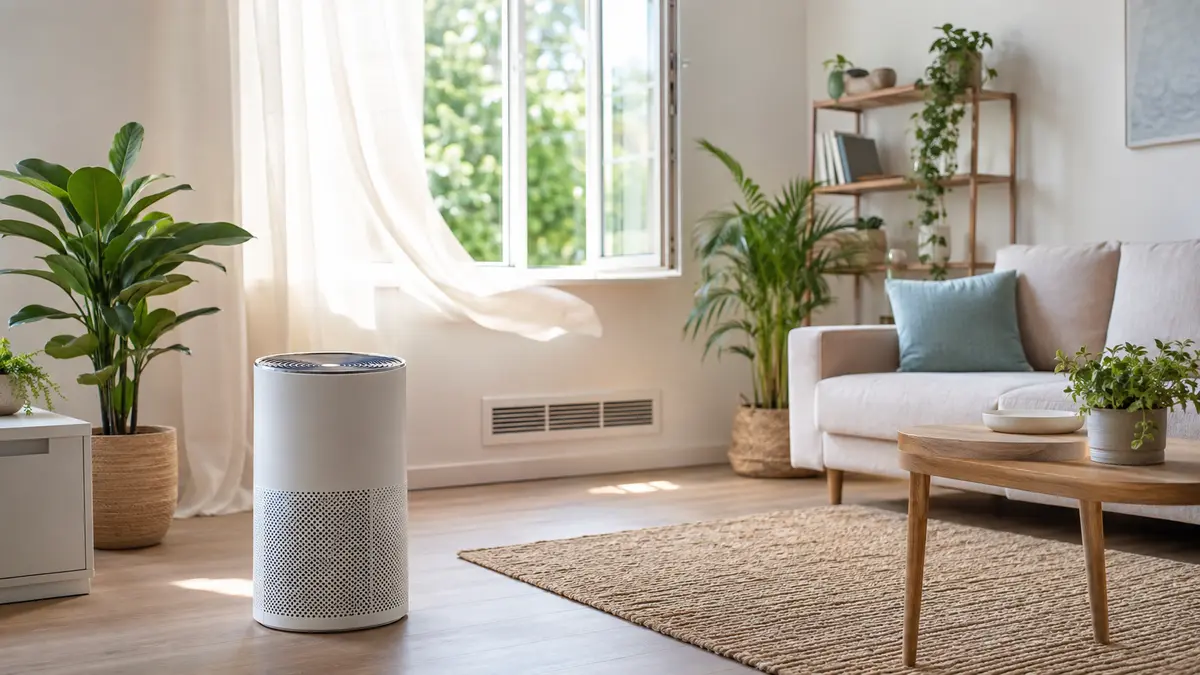
Learning how to improve indoor air quality starts with a simple principle: prevent or remove pollution at its source, bring in cleaner outdoor air when conditions allow, and use filtration as a supporting control. A scented spray or a single gadget cannot solve every air problem. The right plan depends on the pollutant, the room, the weather, the building, and the people using it.
This room-by-room guide explains practical steps for homes and small offices. It covers ventilation, moisture, particles, combustion, cleaning products, HVAC care, and air cleaners. It is general information, not a substitute for professional evaluation of illness, mold damage, gas leaks, asbestos, lead, radon, or other serious hazards.
Understand the three-part indoor air strategy
The U.S. Environmental Protection Agency describes three basic approaches: source control, improved ventilation, and air cleaning or filtration. In most homes, source control is the most direct starting point because it stops pollutants from entering the air rather than trying to collect them later.
1. Control the source
Examples include taking smoking outdoors and away from doors or windows, using an externally vented range hood during cooking, repairing water leaks, storing fuels and solvents safely outside living areas, choosing lower-emission products, and removing badly contaminated materials when appropriate. Source control also means avoiding activities that create unnecessary particles or fumes.
2. Ventilate with outdoor air
Ventilation dilutes and removes indoor pollutants. Open windows and doors when weather, security, pollen, smoke, and outdoor pollution conditions make that sensible. Use properly vented kitchen and bathroom exhaust fans. Mechanical ventilation systems need correct operation and maintenance.
The EPA’s guidance on improving indoor air quality notes that outdoor air can also contain pollutants. During wildfire smoke, heavy traffic pollution, dust storms, or high pollen, opening windows may make conditions worse. Check trustworthy local air-quality information and adapt the strategy.
3. Filter or clean the air
Filtration can reduce airborne particles when the device and filter are appropriate, the air actually passes through the filter, and maintenance is consistent. It does not replace source control or adequate ventilation, and many portable devices do little for gases or pollutants settled on surfaces.
Begin with a home air-quality walkthrough
Walk through the building slowly and use your senses without deliberately exposing yourself to a suspected hazard. Look for water stains, condensation, damaged materials, visible dust, blocked vents, unvented appliances, strong chemical odors, stored fuel, and exhaust entering from an attached garage. Note when and where symptoms or odors appear, but remember that lack of smell does not prove the air is safe.
Create a simple log with the date, room, weather, activity, ventilation state, odor or visible sign, and action taken. Patterns may reveal that a problem appears during cooking, after cleaning, when the HVAC starts, during humid weather, or when outdoor smoke arrives.
Prioritize urgent warning signs
Leave the area and contact emergency services or the appropriate utility if a fuel odor, carbon-monoxide alarm, sudden severe symptoms, visible fire or smoke, or another immediate danger is present. Do not search for a gas leak with a flame or turn electrical switches on and off in a suspected gas-filled area.
Persistent breathing difficulty, chest pain, confusion, fainting, or severe symptoms require urgent medical attention. If symptoms repeatedly improve away from a building and return inside, document the pattern and seek qualified medical and building advice.
Control moisture before mold grows
Moisture control is one of the most important parts of a healthy building. Water can enter through roof and plumbing leaks, wet foundations, flooding, condensation, humid outdoor air, and everyday activities such as cooking and showering.
The EPA recommends keeping indoor humidity below 60 percent and, ideally, in the range of 30 to 50 percent. Conditions vary with climate and season, so use that range as practical guidance rather than forcing a building to an exact number at all times.
Measure humidity
An inexpensive hygrometer provides more useful information than guessing. Place it away from direct sun, vents, humidifiers, and water sources. Check several rooms over several days. High readings near a bathroom may indicate weak exhaust; high readings throughout the home may point to outdoor humidity, a damp foundation, an oversized cooling system, or another building issue.
Repair leaks promptly
Find and fix the water source before repainting or replacing finishes. Dry wet materials as quickly as practical. A recurring stain is evidence of an unresolved source. Large, contaminated, sewage-affected, or hidden mold problems deserve professional assessment and safe remediation.
Manage condensation
Condensation forms when moist air meets a cold surface. Use kitchen and bathroom exhaust, insulate appropriate cold surfaces, improve air movement, and address thermal bridges with qualified advice. Wiping a window every morning may remove water temporarily but does not correct the moisture balance.
Use humidifiers carefully
A humidifier can improve comfort in dry conditions, but excessive use can support biological growth. Follow the manufacturer’s cleaning and water instructions, avoid directing mist at walls or bedding, and measure room humidity. Stop if nearby surfaces become damp.
Improve air quality in the kitchen
Cooking can produce moisture, particles, odors, and combustion pollutants. Use a range hood that vents outdoors whenever possible, especially when frying, grilling, or using a gas appliance. Start it before cooking and let it run after visible steam and smoke have cleared. Clean grease filters according to the manufacturer’s instructions.
Use back burners when the hood captures them more effectively. Keep pot lids on when practical, avoid overheating oils, and do not burn food intentionally for fragrance or smoke. Never use a gas oven or outdoor cooking equipment to heat an indoor space.
Check that the hood actually exhausts outdoors; some units only recirculate through a filter. A recirculating hood may capture some grease and particles but does not remove moisture and gases in the same way. If installing or changing ventilation, use a qualified contractor who understands make-up air and combustion safety.
Improve bathroom and laundry ventilation
Run the bathroom exhaust fan during a shower or bath and afterward until surfaces begin to dry. Keep the door or transfer path able to supply replacement air. A fan that is noisy, clogged, or vented into an attic may not perform properly. Clean the grille and have the duct and exterior termination checked if moisture persists.
Hang towels so they dry fully, repair toilet and sink leaks, and remove standing water. Clean visible surface growth with a method appropriate to the material and the size of the problem, while fixing the moisture source.
Dryers should exhaust outdoors through a suitable, maintained duct. Clean the lint screen every load and inspect the vent path according to the appliance and building requirements. Never vent a dryer into a room, attic, or crawlspace.
Create cleaner bedrooms and living areas
Reduce tracked-in dirt
Use entry mats, remove outdoor shoes if that suits the household, and damp-clean hard surfaces. A vacuum with effective filtration and a well-sealed body can reduce the amount of dust released during cleaning. Empty or replace bags and filters as directed, preferably without spreading dust through the room.
Wash and dry textiles
Wash bedding regularly using a method appropriate to the fabric, dry it completely, and keep mattresses and upholstered furniture dry. Reduce clutter that collects dust and makes cleaning difficult. If pets are an allergen source for someone in the household, discuss a practical management plan with a medical professional; a single air cleaner is unlikely to remove allergens from all surfaces.
Avoid unnecessary fragrance and smoke
Air fresheners, incense, candles, and fragranced cleaning products can add particles or volatile compounds. They do not remove a pollution source. Investigate the odor, ventilate appropriately, and choose unscented or lower-emission products where possible.
Smoking and vaping should remain outside and away from openings. Smoke residue can settle on surfaces and fabrics. Protect children, older adults, and people with heart or lung conditions from exposure.
Maintain HVAC systems and filters
Follow the equipment manufacturer’s maintenance schedule and use a qualified technician for work involving electrical components, refrigerant, fuel, or combustion. Keep supply and return grilles clear of furniture, paper, and rugs.
Choose a compatible filter
A higher-efficiency filter can capture smaller particles, but the system must be designed to handle its resistance. An overly restrictive or poorly fitted filter may reduce airflow or allow air to bypass the media. Consult the equipment documentation or a qualified HVAC professional before changing filter type.
Check the filter regularly, especially during heavy heating or cooling seasons, construction, smoke events, or periods with pets and high dust. Replace or clean it according to the observed condition and manufacturer’s guidance. Record the date on the frame or in a maintenance calendar.
ENERGY STAR’s heating and cooling maintenance checklist recommends inspecting, cleaning, or changing filters regularly because a dirty filter can increase costs and damage equipment.
Keep condensate systems clear
Cooling equipment removes moisture from the air. A blocked drain or damaged pan can create water damage and biological growth. Include condensate lines and pans in professional service. Investigate unexplained water near indoor equipment promptly.
Use portable air cleaners wisely
Choose a device for a defined room and pollutant. For particles, look for a clear clean-air delivery rating or equivalent performance information at the intended fan speed. A unit that is too small or always run on an intolerably loud setting will provide limited benefit.
Place the cleaner where air can enter and leave freely, not behind a sofa or curtain. Keep it away from water and follow electrical safety instructions. Run it long enough to process room air, and replace filters on schedule or when performance declines.
Avoid ozone-generating devices
Ozone is a lung irritant and should not be intentionally produced in occupied spaces. Be cautious with products marketed using vague terms such as activated oxygen or energized air. Select devices that do not intentionally generate ozone and that provide transparent performance data.
Know what a particle filter cannot do
A particle filter is not a carbon-monoxide detector, moisture repair, mold-remediation plan, or complete solution for gases. Some products include sorbent media for certain gases, but performance and capacity vary. Source control and ventilation remain essential.
Handle cleaning, hobbies, and renovations safely
Cleaning products
Read and follow product labels. Use only the recommended amount, ventilate as directed, and never mix cleaning chemicals. Store them in their original containers away from children, food, heat, and incompatible products. A stronger smell does not mean a surface is cleaner.
Printing, crafts, and home workshops
Printers, adhesives, paints, resins, solvents, sanding, and woodworking can create particles or fumes. Keep higher-emission work out of living spaces when possible, use local exhaust designed for the task, and follow product safety instructions. Personal protective equipment should be selected for the hazard and does not replace ventilation.
Renovation hazards
Disturbing older paint, insulation, flooring, ceiling material, or dust can release hazardous substances. Age alone does not identify a material, and visual inspection may not be enough. Before sanding, drilling, demolition, or removal, determine whether professional testing and regulated procedures apply.
Isolate the work area, control dust at the source, and prevent the HVAC system from distributing contaminants, using a project-specific plan. Keep occupants, especially children and vulnerable people, away until cleanup and verification are complete.
Do not overlook combustion and radon
Carbon monoxide
Install carbon-monoxide alarms where required and according to manufacturer and local guidance. Test them and replace batteries or units on schedule. An alarm is a warning device, not a substitute for correct appliance installation, ventilation, and professional maintenance.
Have fuel-burning appliances, chimneys, and vents inspected by qualified people. Never operate a generator, charcoal grill, vehicle, or fuel-burning outdoor device inside a home, garage, basement, or other enclosed area. Keep generators far from openings and follow official safety instructions.
Radon
Radon is invisible and odorless, so testing is the only way to know the level. Use an approved test method for your location and follow placement and timing instructions. If the result is elevated, consult the relevant public-health authority and a qualified mitigation professional.
A room-by-room action table
| Area | Likely concern | Practical first action |
|---|---|---|
| Kitchen | Cooking particles, moisture, combustion | Use an outdoor-vented hood and avoid overheating food |
| Bathroom | High humidity and surface moisture | Run a working outdoor-vented exhaust fan |
| Bedroom | Dust, allergens, fragrance | Wash bedding, reduce clutter, damp-clean surfaces |
| Basement | Leaks, dampness, radon | Repair water entry, measure humidity, test for radon |
| Attached garage | Fuel, exhaust, stored chemicals | Never idle vehicles and keep the air barrier intact |
| Office | Printing, dust, blocked vents | Ventilate tasks and keep equipment and grilles clean |
| Laundry | Moisture and dryer exhaust | Vent dryer outdoors and maintain the lint path |
Thirty-day indoor air improvement plan
Week 1: inspect and measure
Walk every room, note water and combustion risks, confirm alarms, measure humidity, check local outdoor air conditions, and list activities that create smoke, dust, fragrance, or fumes. Deal with urgent hazards immediately.
Week 2: remove sources
Repair simple leaks, stop indoor smoking and unnecessary burning, move fuels and solvents to appropriate storage, reduce fragranced products, and correct appliance or exhaust problems with qualified help.
Week 3: improve ventilation and filtration
Clean exhaust grilles, confirm fans terminate outdoors, replace compatible HVAC filters, clear vents, and choose a properly sized portable cleaner only for a defined need.
Week 4: create a maintenance system
Add filter checks, alarm tests, gutter and leak inspections, exhaust cleaning, humidity reviews, and appliance service to a calendar. Assign an owner and keep records. The site’s seasonal home maintenance checklist can help connect air quality with building upkeep.
When monitoring and professional testing make sense
Consumer sensors can help reveal patterns, but a number on a display is only useful when you understand what is being measured, the device’s limits, and the action that follows. Low-cost particle sensors may show changes during cooking, cleaning, outdoor smoke, or filter use. Carbon-dioxide readings can sometimes help evaluate occupancy and ventilation patterns, but they do not directly measure every indoor pollutant and should not be treated as a complete air-quality score.
Before buying a monitor, write down the question. “Do particles increase when we fry food?” is testable. “Is this house healthy?” is too broad for one sensor. Check the device’s measurement range, accuracy information, calibration needs, data privacy, and placement instructions. Keep it away from direct vents, windows, cooking plumes, and humidifiers unless the specific question requires that location.
Interpret trends rather than chasing one reading
Record the room, time, activity, outdoor conditions, and ventilation state. Compare similar periods. A short spike beside a toaster means something different from a high level across several rooms for hours. If a measurement changes after an intervention, repeat the observation on another day before assuming the cause is confirmed.
Do not use a general consumer sensor as a life-safety device. Carbon-monoxide and smoke protection require listed alarms installed and maintained according to applicable instructions. Gas leaks, radon, asbestos, lead, and many biological or chemical contaminants need pollutant-specific methods and qualified interpretation.
Situations that deserve qualified help
Seek appropriate professional assessment when water damage is extensive or hidden, mold returns after cleaning, sewage or contaminated floodwater is involved, combustion appliances draft poorly, odors are strong and unexplained, many occupants experience related symptoms, or the suspected material may contain regulated hazards. Choose a professional whose training and scope match the problem rather than someone who sells only one device or treatment.
Ask for a written problem statement, inspection method, testing plan if needed, limitations, results, corrective options, and a way to verify that work succeeded. Avoid indiscriminate sampling without a clear question. A useful investigation connects building history, occupant reports, visual inspection, ventilation, moisture, and pollutant-specific evidence.
Verify improvements
After repairs, confirm that the source is controlled. Check that the leak remains dry after rain, humidity is lower during the same kind of weather, exhaust actually reaches outdoors, filters fit without gaps, and odors or particle patterns do not return. Retain invoices, photographs, test reports, equipment models, and maintenance dates. Good records help future owners, tenants, technicians, and health professionals understand what changed.
Air quality in a home office
A home office may be occupied for long uninterrupted periods, so small problems become noticeable. Keep the supply and return paths open, avoid positioning a printer directly beside the breathing zone, and ventilate craft or adhesive work elsewhere. A room with a closed door may need a designed air-transfer path or mechanical ventilation; simply blocking the gap under the door can reduce airflow.
Use the home office setup for productivity guide to coordinate ventilation with lighting, acoustics, ergonomics, and secure equipment. Comfort matters, but do not solve a stuffy room by introducing strong fragrance. Identify whether heat, humidity, carbon dioxide, particles, or an outdoor source is the real issue.
Frequently asked questions
What is the fastest way to improve indoor air quality?
Remove the active source first. Stop smoke, vent cooking, repair a leak, or move a high-emission activity outside. Then ventilate when outdoor conditions are suitable and use compatible filtration for remaining particles.
Should I keep windows open all day?
Not automatically. Outdoor smoke, pollen, dust, humidity, temperature, security, and nearby traffic affect the decision. Ventilate when outdoor air is cleaner and conditions are appropriate; otherwise rely on suitable mechanical ventilation and filtration.
What indoor humidity is best?
The EPA advises keeping humidity below 60 percent and ideally around 30 to 50 percent. Climate and season matter. Use a hygrometer, prevent condensation, and address the water source rather than depending only on a dehumidifier.
Does an air purifier remove mold?
A particle filter may capture some airborne spores, but it does not repair moisture, remove growth from materials, or remediate a contaminated building. Fix the water source and use an appropriate cleanup or professional remediation plan.
Are houseplants enough to clean indoor air?
Ordinary numbers of houseplants should not be treated as a substitute for source control, ventilation, or filtration. Overwatered soil can also add moisture or support growth. Keep plants if you enjoy them, and maintain them without relying on them as an air-treatment system.
How do I know whether an air cleaner is large enough?
Match its verified clean-air delivery or equivalent rating to the room size and pollutant, considering the fan speed you can tolerate. Place it where airflow is not blocked and maintain the filter. More than one unit may be needed for separated rooms.
Final takeaway
The most reliable way to improve indoor air quality is to identify the source, control moisture and combustion, ventilate when outdoor conditions allow, and maintain correctly sized filtration. Work room by room, respond quickly to warning signs, and keep a written maintenance schedule. Clean air is a building-management practice, not a one-time product purchase.